WHO and the EU deliver life-saving surgical equipment to frontline hospitals in Ukraine

As the full-scale invasion of Ukraine enters its fifth year, come February 2026, health-care facilities in the regions of Chernihiv, Kherson, Odesa, Mykolaiv and Sumy continue to operate under extreme pressure.
Last December, the WHO Country Office in Ukraine, with financial support from the European Union (EU) Directorate-General for Enlargement and Eastern Neighbourhood, delivered critical medical equipment to hospitals in those frontline regions – equipment that helps save lives every day and ensures continuity of health-care services.
Without this equipment, worth US$ 800 000, safe and timely management of trauma patients would be impossible.
To strengthen hospital capacities, WHO delivered 5 electrosurgical units to key hospitals in Kherson, Odesa and Sumy regions; 5 anaesthesia stations, equipped with patient monitors and integrated infusion and syringe pumps to facilities in Chernihiv and Sumy regions; and 20 intensive care beds to a hospital in Mykolaiv region.
Why this equipment is vital
“This equipment is critical for hospitals on the frontline: it improves patient safety and enhances the quality of health-care services. Thanks to the European Union, we continue to support people living in frontline areas. It is very important for us to stay close to those who need help,” said Dr Jarno Habicht, WHO Representative in Ukraine.
An anaesthesia station is a comprehensive medical device for administering general anaesthesia and monitoring patients’ vital functions during surgical and other medical interventions. It provides oxygen and anaesthetics delivery, ventilation, and continuous monitoring of vital parameters such as heart rate, blood pressure, oxygen saturation and respiration.
Integrated infusion and syringe pumps allow precise dosing of medications, which is crucial during anaesthesia and for stabilizing critically ill patients.
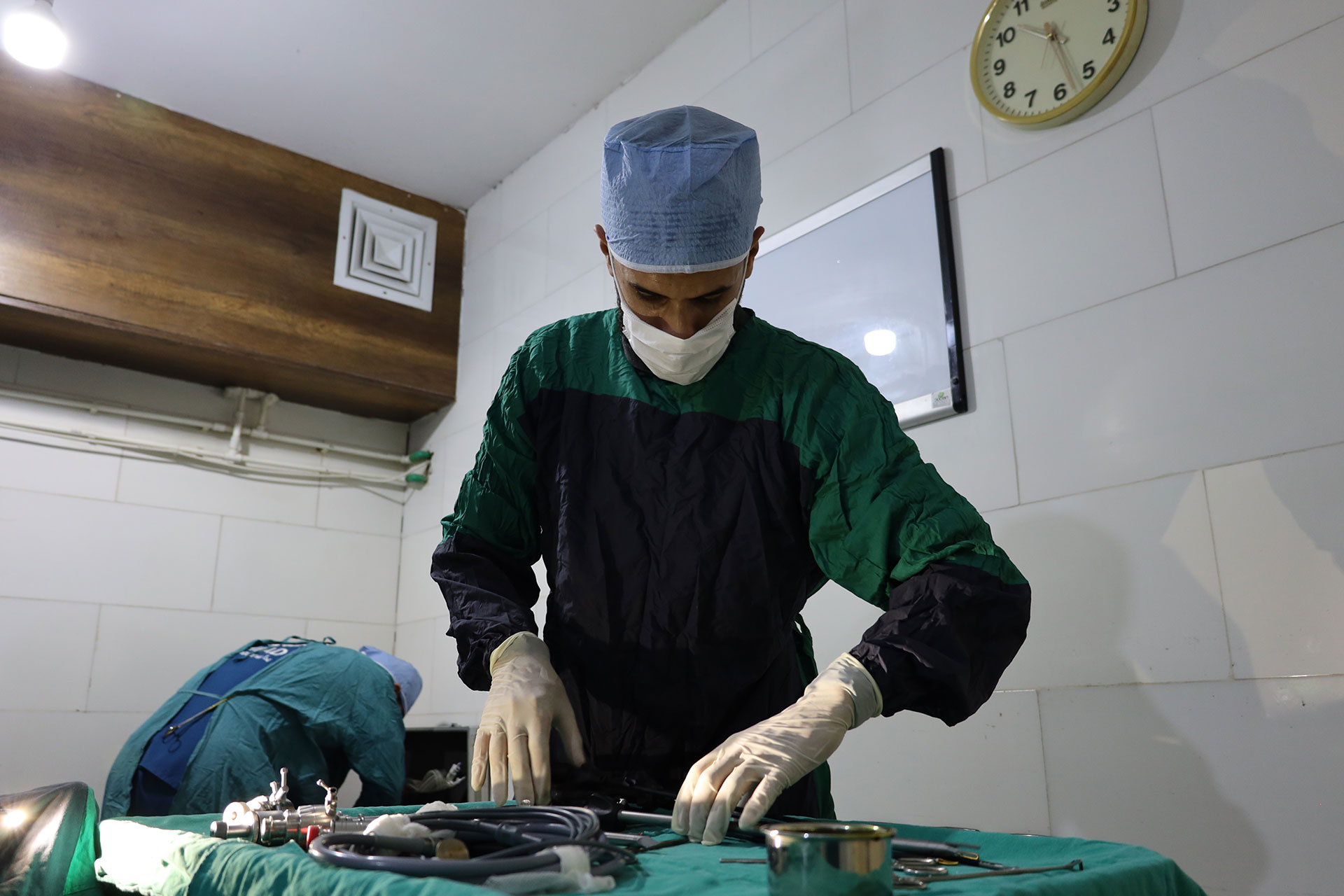
Electrosurgical units enable highly precise surgical interventions, minimizing blood loss, reducing complication risks and supporting faster patient recovery.
Intensive care beds are designed for continuous monitoring and life support of critically ill patients, ensuring maximum safety.
Emergency care for frontline regions
The equipment strengthens emergency and surgical care across several regions on the frontline.
Sumy region is one example, where this support is urgently needed: regular shelling continues and local hospitals receive patients requiring urgent surgical intervention. One of these hospitals operates 17 surgical rooms and plans to upgrade its emergency surgery unit with 2 new anaesthesia stations.
Other regions have similar needs.
In Chernihiv region, a new anaesthesia station is bolstering the capacity to provide safe surgical care to people living close to the frontline.
In Mykolaiv region, intensive care beds are supporting post-operative patients, people with strokes and complex neurological conditions, and other critically ill patients – including internally displaced people.
In Odesa and Kherson regions, new electrosurgical units will strengthen surgical services and improve patient safety across a wide range of medical specialties.
The need is dire
“Without such equipment, it is impossible to take care of patients requiring urgent surgical intervention. We are currently receiving a very high number of patients, so we need such life-saving equipment,” explained Hennadiy Stukalo, head of the anaesthesiology department of a hospital in Chernihiv region.
Overall, the medical equipment significantly increases the safety and efficiency of life-saving care in war-torn regions, and strengthens the resilience of the health-care system in the long run. It allows hospitals to maintain surgical capacity, reduce post-operative complications and, most importantly, save more lives.
link